We model the world as it is and simulate the world as it could be.
What is Computational Engineering? Throughout my time in the department, I’ve noticed that several students who enter the major don’t fully realize what they are signing up for or just how significant the field has become. As a recent graduate of the department, I feel well positioned to share what Computational Engineering actually is. My goal in this post is to give incoming students (hopefully you) a clearer sense of the field and what makes it such a unique and exciting area to explore.
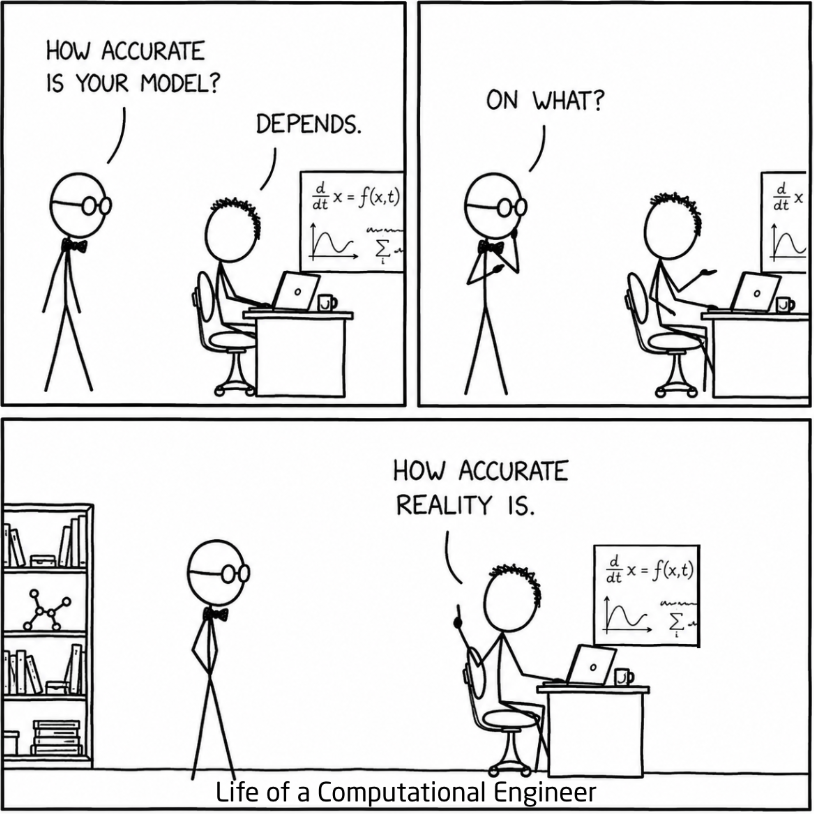
One of the challenges in explaining Computational Engineering is that it doesn’t sit neatly within a single well-defined category. Instead, it sits at the intersection of several established fields. It relies on mathematics like an applied mathematician, programming like a computer scientist, modeling like an engineer, and data analysis like a data scientist. This ambiguity is the main reason why I’ve seen recruiters, professors, and even current students struggle to understand exactly where Computational Engineering fits.
At its core, Computational Engineering is about building mathematical models of real-world systems and using computation to simulate how those systems behave. It is a way of turning physical intuition into something that can be tested, explored, and predicted on a computer before it is ever observed in reality.
While this definition does capture the core idea of the field, it can definitely feel like it leaves a lot of open questions about what Computational Engineering actually is and what it looks like in practice. By now you most likely have some questions floating in your mind (which I hopefully will be able to address):
- What really is Computational Engineering?
- What kinds of problems does Computational Engineering prepare you to solve, and what tools will you develop?
- How does Computational Engineering differ from Computer Science, Statistics and Data Science, Computer Engineering, and Software Engineering?
- What should you know before starting a degree in Computational Engineering?
These are all questions I either had myself or have heard repeatedly from prospective and incoming students. They are important questions. Choosing a major is ultimately about deciding what kinds of problems you want to answer and what tools you’ll have at your disposal to solve them. In my (definitely unbiased) opinion, Computational Engineering gives you a unique set of tools that allow you to ask and answer questions that would otherwise be difficult or sometimes impossible to explore.
What really is Computational Engineering?
To answer this properly, it helps to step back from the name itself and ask what computational engineers actually do.
Computational Engineers translate the laws of physics into mathematics and mathematics into simulations.
That quote has become my go-to description of Computational Engineering. At its core, it is about taking something from the real world (fluids moving past an airfoil, forces acting on a bridge, gases diffusing through pipes) and representing it in a form that can be analyzed mathematically and simulated on a computer.
In practice, this means starting from the physics that describes how a system evolves, translating that physics into a mathematical formulation, and then developing computational methods that allow a computer to approximate and solve the resulting model.
For example, consider airflow over an aircraft wing:
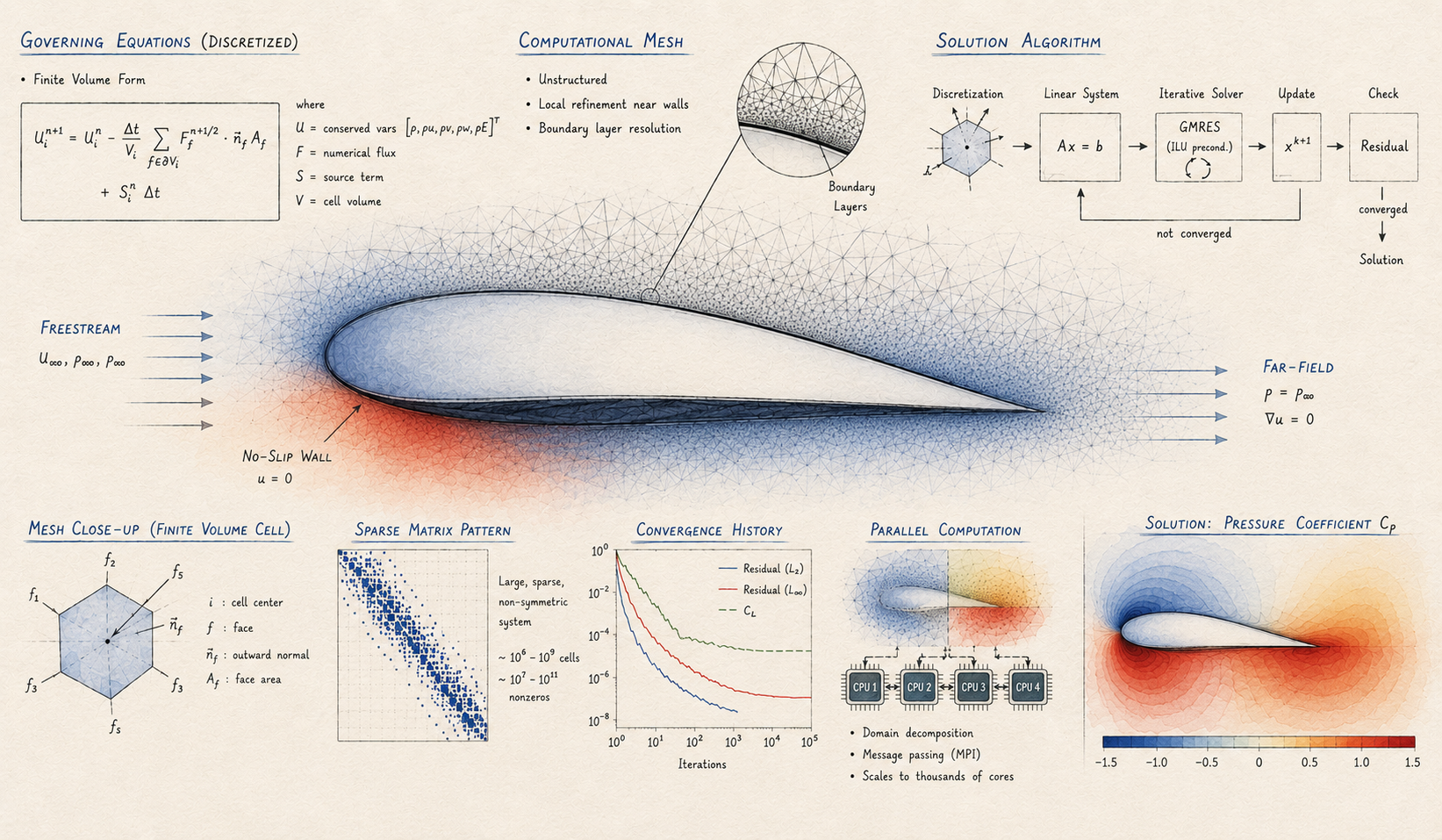
Airflow over a wing is a classic Computational Engineering problem: one physical system understood through physics, mathematics, and computation working together. Press Physics, Mathematics, or Computation above to see how each layer changes the picture.
From physics, we start with the idea that air behaves like a fluid governed by conservation laws for mass, momentum, and energy. These principles describe how velocity, pressure, and density change over space and time.
To make this precise, we translate those physical laws into a set of mathematical equations, often in the form of partial differential equations such as the non-dimensional Navier–Stokes equations. At this stage, the system is fully mathematical but still not something we can solve by hand in any realistic setting.
Since exact solutions are rarely possible, we develop numerical methods that approximate the equations on a grid or mesh, and implement these methods on a computer to simulate how airflow evolves around the wing under different conditions.
This is one example of what Computational Engineering really is: turning real-world problems into mathematical models and using computation to study how those models behave. Everything in the field ultimately traces back to that same process of modeling reality and turning it into computable predictions.
Computational Engineering in the Real World
To me, the best way to understand Computational Engineering is through the problems it tackles. Below I’ve gathered a few examples of the questions Computational Engineering students at UT Austin have worked towards solving:
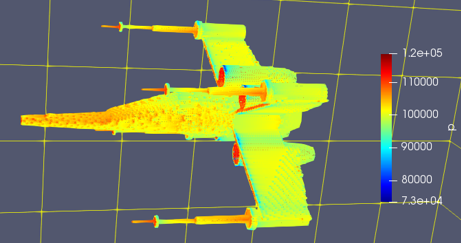
Modern aircraft undergo thousands of virtual experiments before a single prototype is manufactured. Computational engineers create numerical models that simulate airflow, structural deformation, vibration, and performance under extreme conditions.
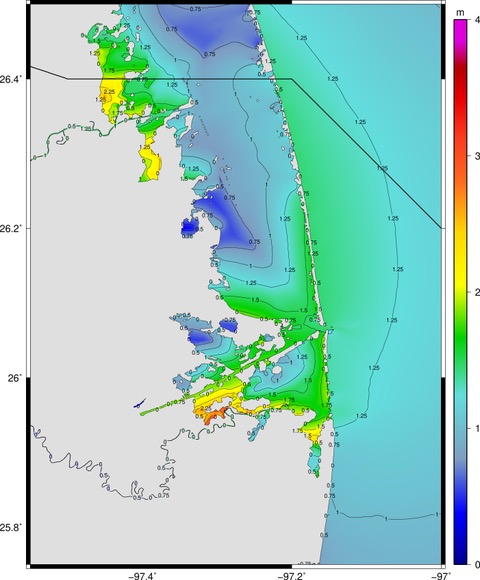
Weather forecasts are built on mathematical models describing fluid flow, heat transfer, atmospheric chemistry, and countless other physical processes. Computational engineers develop the algorithms and software that make these large-scale simulations possible.
Developing new medicines traditionally requires years of expensive laboratory testing. Today, researchers use computational models to simulate molecular interactions, predict protein structures, and identify promising drug candidates before entering the lab. Computational engineers help build the algorithms and simulations that make this process possible.
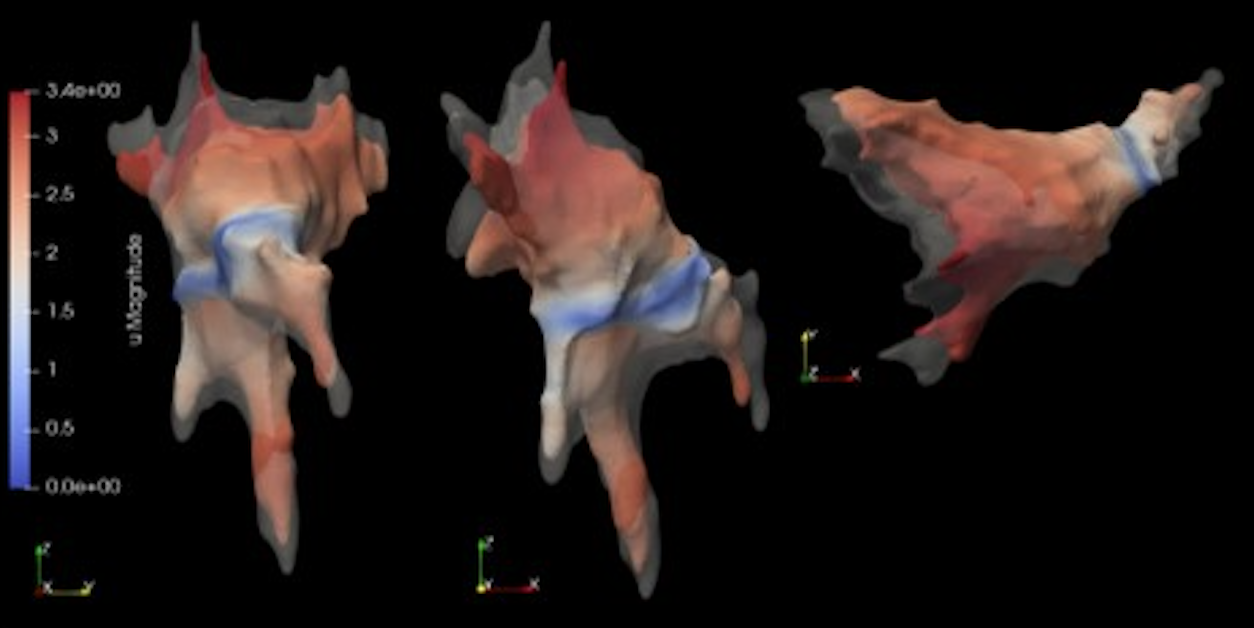
When a spacecraft enters the atmosphere of another planet, there is no opportunity for a second attempt. Engineers must understand aerodynamics, heat transfer, navigation, and control systems long before launch. Computational engineers develop the simulations that allow mission designers to test thousands of scenarios and prepare for conditions that cannot be recreated on Earth.

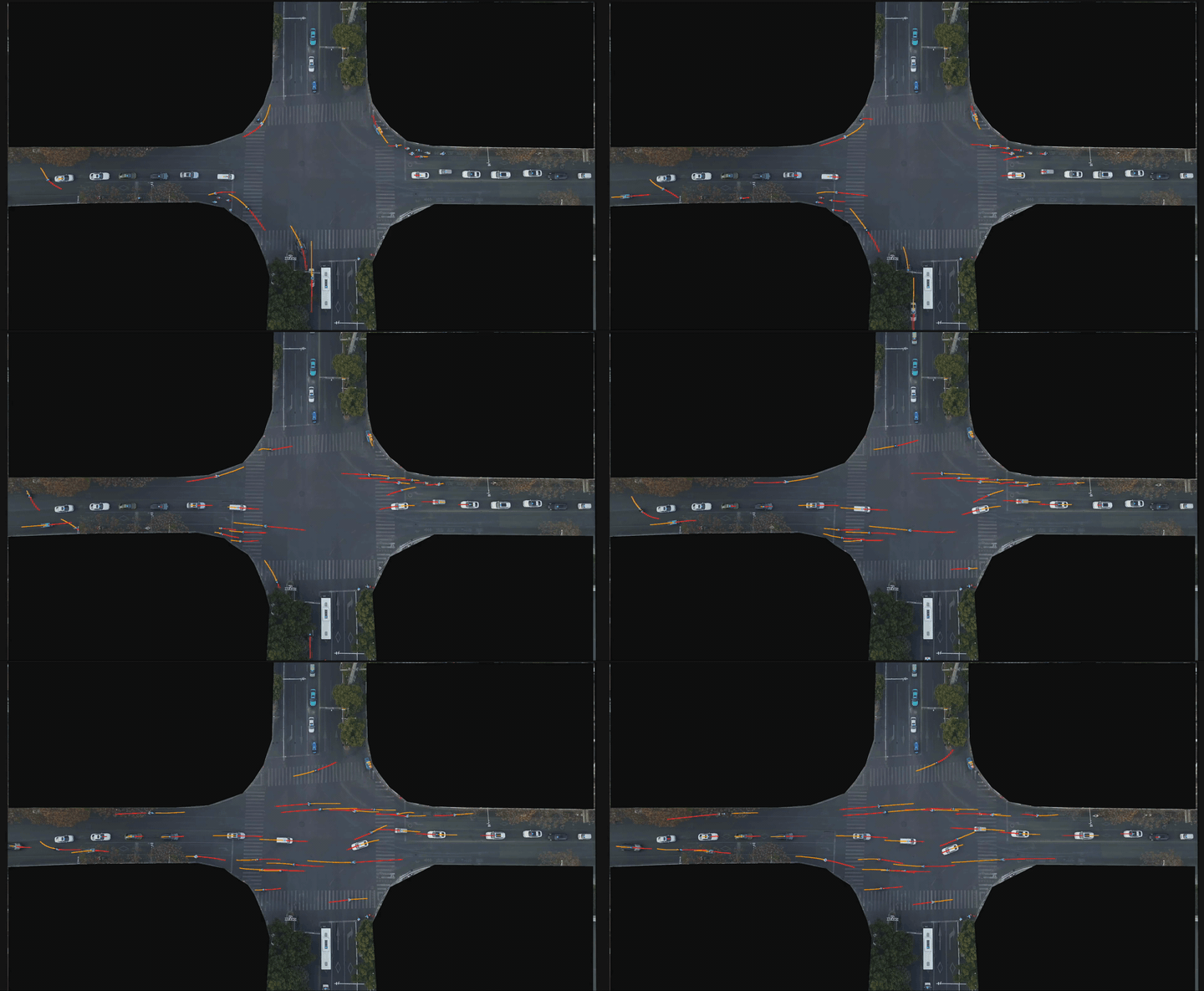
Autonomous vehicles must process information from cameras, radar, and other sensors while continuously predicting the behavior of the world around them. Computational engineers develop the mathematical models, optimization algorithms, and machine learning systems that help these vehicles navigate safely and reliably.
Structural systems experience complex loads that change over time, making it difficult to predict how they will respond in the real world. Computational engineers develop mathematical models and simulations that allow engineers to study stresses, deformations, vibrations, and potential failure points before a structure is ever built.
The Toolbox of a Computational Engineer
Just as someone might reach for a hammer, screwdriver, or measuring tape to construct a structure, Computational Engineers have their own toolbox filled with the skills they use to build models, run simulations, and analyze complex systems that would otherwise be difficult to study directly.
Throughout the degree, you’ll spend your time learning how to:
Click a step to see what it involves
Your COE workflow
Select a step above to explore each stage of the modeling process.
Throughout the degree, you’ll develop a collection of mathematical and computational techniques to help tackle a wide range of challenges. Below are some key terms that encapsulate the tools a Computational Engineer can call upon in order to solve a problem.
Click a book on the shelf to learn more about it







Select a book
Each volume covers a core concept in the Computational Engineering toolbelt.
As you move through the Computational Engineering curriculum, you’ll encounter courses that build different parts of this toolbox. While each class has its own focus, most of them contribute to one of three complementary foundations that together define the degree:
Physics-Based Courses
- Thermodynamics
- Low-Speed Aerodynamics
- Solid Mechanics
- Electromechanical Systems
Understanding the physical systems we want to model and predict.
Mathematics-Based Courses
- Advanced Calculus for Applications II
- Differential Equations with Linear Algebra
- Probability I
- Linear Systems Analysis
The mathematical language used to formulate and analyze engineering models.
Computational Courses
- Engineering Computation
- Scientific Computation
- Advanced Scientific Computation
- Computational Fluid Dynamics
- Computational Methods for Structural Analysis
Techniques to transform mathematical models into practical simulation tools.
These are the tools that Computational Engineers use to tackle complex problems. While the specific application that you pursue may differ, these ideas appear again and again across the models, simulations, and analyses that define the field.
The Fields of a Computational Engineer
Because the need to model, simulate, and predict appears across so many industries, the skills developed in Computational Engineering are valuable in a remarkably wide range of fields. Below are some of the areas where Computational Engineers commonly apply their knowledge.
Click a word to explore each field
Pick a field
Click a word in the grid to explore each specialization.
While each discipline has its own theories and specialized knowledge, many of them increasingly rely on the same computational approach: build a model, simulate its behavior, and use the results to better understand the problem at hand. Hence, even though the details of the problem may change across disiplines, the need to build models and utilize simulations to gain insight stays consistent.
What is the Difference between Computational Engineering and Other Fields?
Unfortunately, because of how unique the field is, I’ve noticed that several groups, especially recruiters, aren’t quite sure what we do and tend to place us into one of three categories: Computer Science, Statistics and Data Science, or Computer Engineering. Hopefully, this section serves as a useful reference when answering the question: “So how are you different from [insert field here]?”
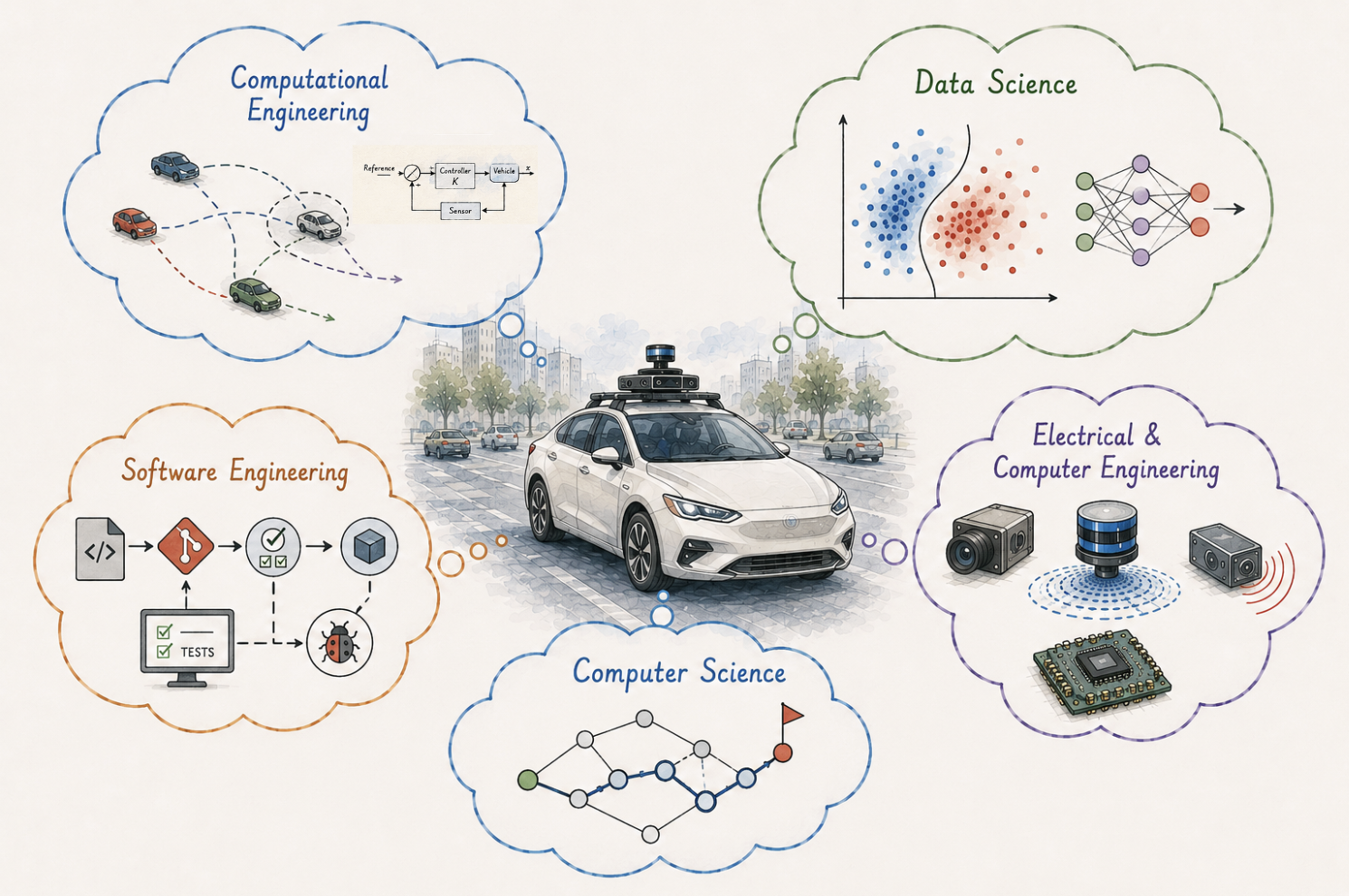
One of the biggest misconceptions is that Computational Engineering is simply Computer Science with extra math. While the two fields overlap heavily, they are fundamentally asking different questions.
Computer Science primarily focuses on computation itself such as algorithms, operating systems, databases, networking, programming languages, and software architecture.
- How can we make an algorithm run faster?
- How can we design scalable software systems?
- How can computers efficiently store and retrieve information?
Computational Engineering focuses on using computation to model and solve physical and scientific problems.
- How can we numerically solve a system of partial differential equations?
- How can we simulate airflow around an aircraft?
- How can we model the spread of a wildfire?
Computer Science builds better computers and software. Computational Engineering builds mathematical models and studies them through computation.
Both fields use mathematics, programming, and large amounts of data but they often approach problems from opposite directions.
Statistics & Data Science extract patterns and insights from data.
- What trends exist within this dataset?
- Can we predict future outcomes from historical observations?
- What can the data tell us about a system we do not fully understand?
Computational Engineering often begins with a mathematical or physical model.
- How can we model this physical system mathematically?
- How can we simulate its behavior under different conditions?
- How closely does our model match reality?
Statistics and Data Science learn from data. Computational Engineering learns from models.
Both fields appear engineering-focused and computer-based on the surface. The difference lies in the systems being studied.
Electrical and Computer Engineers design and understand electrical, electronic, and computing systems.
- How can we design a more efficient processor?
- How can we build reliable communication systems?
- How can we improve embedded device performance?
Computational Engineers use computation as a tool to study other systems.
- How can we simulate the behavior of a fluid?
- How can we model stresses inside a structure?
- How can we solve large-scale mathematical models efficiently?
Electrical and Computer Engineering is often concerned with how computation is physically built. Computational Engineering focuses on what computation tells us about physical phenomena.
Both involve building large-scale computational systems. The key difference: software is usually the final product in Software Engineering, whereas software is often a tool in Computational Engineering.
Software engineers ask:
- How can we build reliable and maintainable software?
- How can we design systems that scale to millions of users?
- How can teams efficiently develop large software systems?
Computational engineers ask:
- How can we accurately model this system?
- How can we solve the governing equations efficiently?
- How can we validate our computational results?
Software Engineering focuses on building software products. Computational Engineering focuses on building computational models.
At its core, Computational Engineering is about taking real physical systems, building mathematical models of them, and using computation to simulate how they behave. We spend just as much time learning how to construct those models as we do learning how to actually simulate them on a computer.
What should you know before starting a degree in Computational Engineering?
If you’re someone who enjoys mathematics, physics, engineering, programming, or simply wants to understand how those subjects are used to solve real-world problems, then Computational Engineering is absolutely the field for you. One of the big reasons I was originally drawn to the field was that it allowed me to combine each discipline and learn the skills to apply them to problems that I found interesting.
Looking back, one of the biggest takeaways for me was realizing that the degree is much less about learning individual topics in isolation and much more about understanding how those topics work together in the world of simulations. As a freshman, it can sometimes feel like you’re collecting a random assortment of puzzle pieces: calculus, differential equations, programming, physics, linear algebra, and more. It is not always obvious how those pieces connect.
Over the multitude of courses, however, that picture becomes much clearer. Mathematics gives you a language for describing a problem. Physics and engineering provide the principles that govern how a system behaves. Computation allows you to study models that would otherwise be impossible to solve by hand. Eventually, those seemingly separate courses stop feeling like separate subjects and start feeling like different parts of the same puzzle.
That, more than anything else, is how I see Computational Engineering today. It is a field centered around modeling and simulation, built on the idea that mathematics, physics, and computation are the most powerful when used together. More personally, Computational Engineering ended up being one of the most rewarding decisions I made during college. It introduced me to incredible friends, fascinating problems, and a set of tools that changed the way I think about the world.
Contact and Connect
If you have any questions about Computational Engineering, UT Austin, research opportunities, coursework, or anything else related to the program, feel free to reach out at yjtexas2005@gmail.com. Also if you notice any typos or have any suggestions for this blog, please reach out.
Finally, don’t be afraid to talk to current students. One of the best ways to learn about Computational Engineering is by hearing from people who are in the program. Every student has a slightly different perspective, and those conversations can often provide insights that you won’t find on a degree plan or university website.
FAQ
I've put together a separate page with resources that me and other Computational Engineering students have found helpful throughout the curriculum organized by topic, from programming and scientific computing to math and physics. See Computational Engineering Resources.
If you want a head start before entering the program, two must-watch recommendations: The Missing Semester of Your CS Education for practical computing skills, and 3Blue1Brown's courses on Calculus and Linear Algebra for gaining a more intuitive understanding of mathematics.
I'm planning on creating a separate blog sharing advice from my own experience in Computational Engineering, along with insights from other students in the program. If this would interest you, please send me an email since these blogs take a long time to set up and knowing that there is interest would be a big boost.
If I had to leave one piece of advice for now: get involved in a technical club or research group and commit real time to it. Most of the skills that translate directly into industry or academia don't come from lectures alone, but from working through open-ended, real-world problems. UT has great opportunities for this kind of experience, and it's where a lot of the most meaningful learning happens.